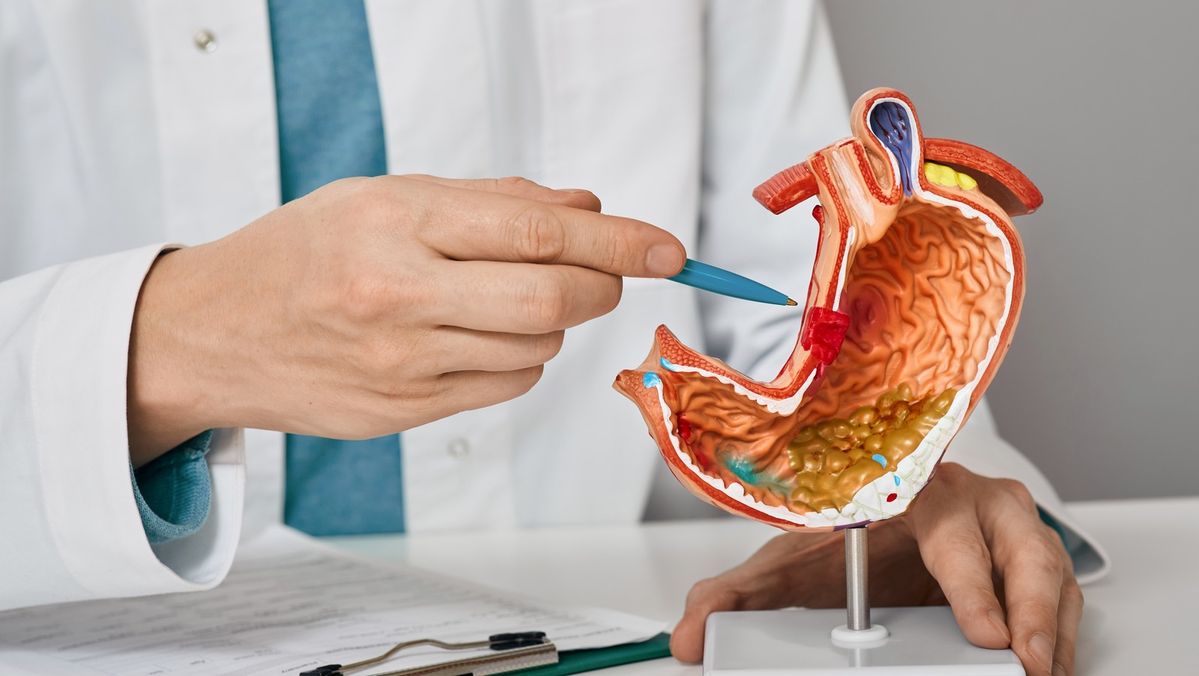
Stomach Cancer Surgery in West Delhi
Stomach cancer, also known as gastric cancer, develops when abnormal cells grow within the lining of the stomach. It can develop in different parts of the stomach, and because early symptoms may be subtle or absent, accurate diagnosis through specialist evaluation is important for understanding the extent of disease and planning appropriate treatment.
Dr. Manish Jain is a GI & HPB Oncosurgeon consulting at the Gastro & HPB Surgery Center in Moti Nagar, West Delhi, with a documented clinical focus that includes stomach (gastric) cancer surgery. Every patient is evaluated individually, with treatment planning based on the tumour type, cancer stage, and overall health.
What Is Stomach Cancer?
The stomach is a muscular organ that breaks down food as part of digestion. Stomach cancer, also known as gastric cancer, develops when abnormal cells grow within the lining of the stomach. It can develop in different parts of the stomach, and because early symptoms are often subtle or absent, specialist evaluation and accurate diagnosis are important for understanding the extent of disease and planning appropriate treatment.
Types of Stomach Cancer
Stomach cancers can vary in type and behaviour, and treatment depends on the specific tumour and individual patient factors.
Gastric Adenocarcinoma: Most stomach cancers are gastric adenocarcinomas, which develop in the glandular lining of the stomach.
Gastrointestinal Stromal Tumours (GIST): Less commonly, tumours such as GIST can develop in the stomach wall.
Individualised Treatment: Not all stomach tumours are treated in the same way. Treatment depends on the tumour type, stage, location, and other patient-specific factors.
Specialist evaluation is important to determine the tumour type, understand the extent of disease, and plan the most appropriate treatment approach for each patient.
Types of Surgery for Stomach Cancer
Partial Gastrectomy
In selected cases, part of the stomach may be removed, depending on the tumour's location and extent, while preserving the remaining healthy stomach tissue.
Total Gastrectomy
In selected cases, the entire stomach may need to be removed, depending on the tumour's location, size, and extent of disease.
Lymph Node Dissection
Evaluation or removal of nearby lymph nodes may be part of stomach cancer surgery, helping determine the cancer's stage and guide further treatment planning.
Medical Assessment Note: The type and extent of stomach cancer surgery are not the same for every patient. The appropriate procedure depends on the tumour's type, location, size, stage, extent of disease, and the patient's overall health.
When May Stomach Cancer Surgery
Be Recommended?
Surgery may be considered depending on several factors assessed during specialist evaluation. Treatment planning is individualised according to the cancer's characteristics and the patient's overall health.
The stage of the cancer
The tumour's location within the stomach
The extent of disease
Whether the tumour can be surgically removed (resectability)
Lymph node involvement
Whether the cancer has spread
The patient's overall health and any previous or planned treatment
These factors are considered together, after appropriate evaluation, on an individual case basis.
What Is a Gastrectomy?
A gastrectomy is the surgical removal of part or all of the stomach. A partial gastrectomy removes only the affected portion, while a total gastrectomy removes the entire stomach. Which type is appropriate depends on the tumour's location, size, and extent, as determined by the treating surgeon based on the individual clinical situation.
Why May Lymph Nodes Be Removed During Stomach Cancer Surgery?
Lymph nodes near the stomach may be assessed or removed as part of surgery because they can be one of the first places cancer spreads. Examining these nodes under pathology helps determine the cancer's stage more accurately, which in turn helps guide decisions about whether further treatment, such as chemotherapy, may be appropriate.
Diagnosis and Staging Before Stomach Cancer Surgery
Depending on the case, doctors may recommend a combination of investigations to understand the extent of disease and plan appropriate treatment. These can include upper GI endoscopy, biopsy and histopathology, CT imaging, PET/CT in selected cases, and blood tests.
Not every patient requires every test — the treating surgeon determines what is relevant to each individual case. Staging is important because it helps guide the overall treatment plan.
Role of Endoscopy in Stomach Cancer Diagnosis
Upper GI endoscopy is a procedure that allows direct visual examination of the stomach lining using a thin, flexible camera. It is commonly used to identify abnormal areas within the stomach and to obtain biopsy samples, which are then examined under a microscope by a pathologist.
This pathology review is important for confirming the diagnosis and understanding the tumour type.
How Other Cancer Treatments May Fit Into Stomach Cancer Care
Stomach cancer treatment may involve more than surgery alone. Depending on the patient's condition and staging, treatment planning may include chemotherapy, and in selected cases, targeted therapy or immunotherapy, in addition to surgery.
Some patients may receive treatment before surgery and/or after surgery, depending on their diagnosis and staging. Not every patient needs every treatment, and this page describes these options at a general educational level rather than confirming that Dr. Jain personally provides each one.
Surgical Approaches for Stomach Cancer
Open Surgery: A traditional surgical approach, used where clinically appropriate, particularly for more complex or extensive disease.
Laparoscopic Surgery: An approach using smaller incisions and camera-guided technique, reflecting Dr. Jain's documented expertise in laparoscopic gastrointestinal surgery.
Robotic-Assisted Surgery: Dr. Jain is a certified robotic surgeon and proctor for Intuitive's da Vinci platform, offering robotic-assisted surgery where clinically suitable.
No single surgical approach is universally superior. The most appropriate option depends on tumour characteristics, cancer stage, patient factors, the planned operation, and the surgeon's assessment. Minimally invasive and robotic techniques do not guarantee faster recovery, less pain, or better cancer outcomes for every patient.
What Happens During Stomach Cancer Surgery?
The exact procedure depends on the tumour's location, the cancer's stage, the type of gastrectomy planned, the surgical approach used, and the patient's overall health. The surgical team explains the planned operation and what to expect before surgery takes place; this page is intended for general patient education rather than detailed surgical instruction.
Life and Recovery After Stomach Cancer Surgery
Recovery generally involves a period of hospital-based monitoring, nutritional support, a gradual return to eating, follow-up appointments, and monitoring for weight or digestive changes. Pathology results are reviewed after surgery to guide any further treatment that may be needed.
Recovery varies from patient to patient, depending on the extent of surgery and individual health factors. Dietary adjustments after gastrectomy are common, and patients are advised to follow the specific guidance of their treating team rather than general information found online.
Risks and Considerations of Stomach Cancer Surgery
As with any major surgery, stomach cancer surgery carries potential risks that should be discussed individually with the treating surgeon. Depending on the procedure, these can include bleeding, infection, blood clots, anaesthesia-related complications, leakage, digestive changes, nutritional deficiencies, and delayed gastric emptying or other digestive issues.
The surgeon will discuss the potential benefits, risks and alternatives based on the individual patient's condition.
Stomach Cancer Surgery in West Delhi
Patients looking for stomach cancer surgery in West Delhi can consult Dr. Manish Jain at the Gastro & HPB Surgery Center in Moti Nagar for evaluation and discussion of appropriate treatment options.
The clinic's location on Shivaji Marg is within reach of nearby West Delhi neighbourhoods including Punjabi Bagh, Rajouri Garden, Kirti Nagar, and Patel Nagar, in addition to Moti Nagar itself. Patients searching for gastric cancer surgery in Delhi more broadly are also welcome to consult at this location, with hospital-based care coordinated through Dr. Jain's affiliation with BLK-Max Super Speciality Hospital where required.
Gastrointestinal Cancer Surgical Care
Stomach cancer falls within the broader field of gastrointestinal cancer surgery, which also includes cancers of the esophagus, colon, rectum, liver, gallbladder, and appendix. As a GI & HPB Oncosurgeon, Dr. Manish Jain's documented clinical focus spans these related conditions, reflecting a comprehensive approach to gastrointestinal cancer care.
Why Specialist Evaluation Matters in Stomach Cancer
Because stomach cancer treatment depends heavily on accurate diagnosis and staging, specialist evaluation plays a central role in determining whether surgery is a suitable option. It also helps clarify the range of treatment options available and supports individualised treatment planning and follow-up care.
Frequently Asked Questions
It is a surgical procedure, generally called a gastrectomy, to remove part or all of the stomach affected by cancer, often with evaluation of nearby lymph nodes.
"Stomach cancer" and "gastric cancer" refer to the same condition — gastric is simply the medical term for the stomach.
This depends on the cancer's stage, tumour location, whether it can be surgically removed, and the patient's overall health, as assessed during specialist evaluation.
A gastrectomy is the surgical removal of part or all of the stomach, used in the treatment of stomach cancer depending on the tumour's location and extent.
A partial gastrectomy removes only the affected portion of the stomach, while a total gastrectomy removes the entire stomach. The appropriate type depends on tumour location and extent.
Nearby lymph nodes are often evaluated or removed as part of surgery, since this helps determine the cancer's stage and guide further treatment.
Depending on the case, this may include upper GI endoscopy, biopsy, CT imaging, PET/CT in selected cases, and blood tests.
Yes. Depending on the individual case, chemotherapy may be considered before and/or after surgery as part of the overall treatment plan.
Recovery varies from patient to patient and generally involves nutritional support, a gradual return to eating, and follow-up appointments. The surgical team provides individual guidance.
General risks can include bleeding, infection, blood clots, anaesthesia-related complications, leakage, and digestive or nutritional changes. Individual risks should be discussed with the surgeon.
No. Suitability depends on the cancer's stage, its extent, and the patient's overall health, and is determined through specialist evaluation.
Dr. Manish Jain consults at the Gastro & HPB Surgery Center, Sree Jee Gastro & Liver Clinic, in Moti Nagar, West Delhi.
Call the Moti Nagar clinic directly at +91 89290 60060 to schedule a consultation with Dr. Manish Jain.