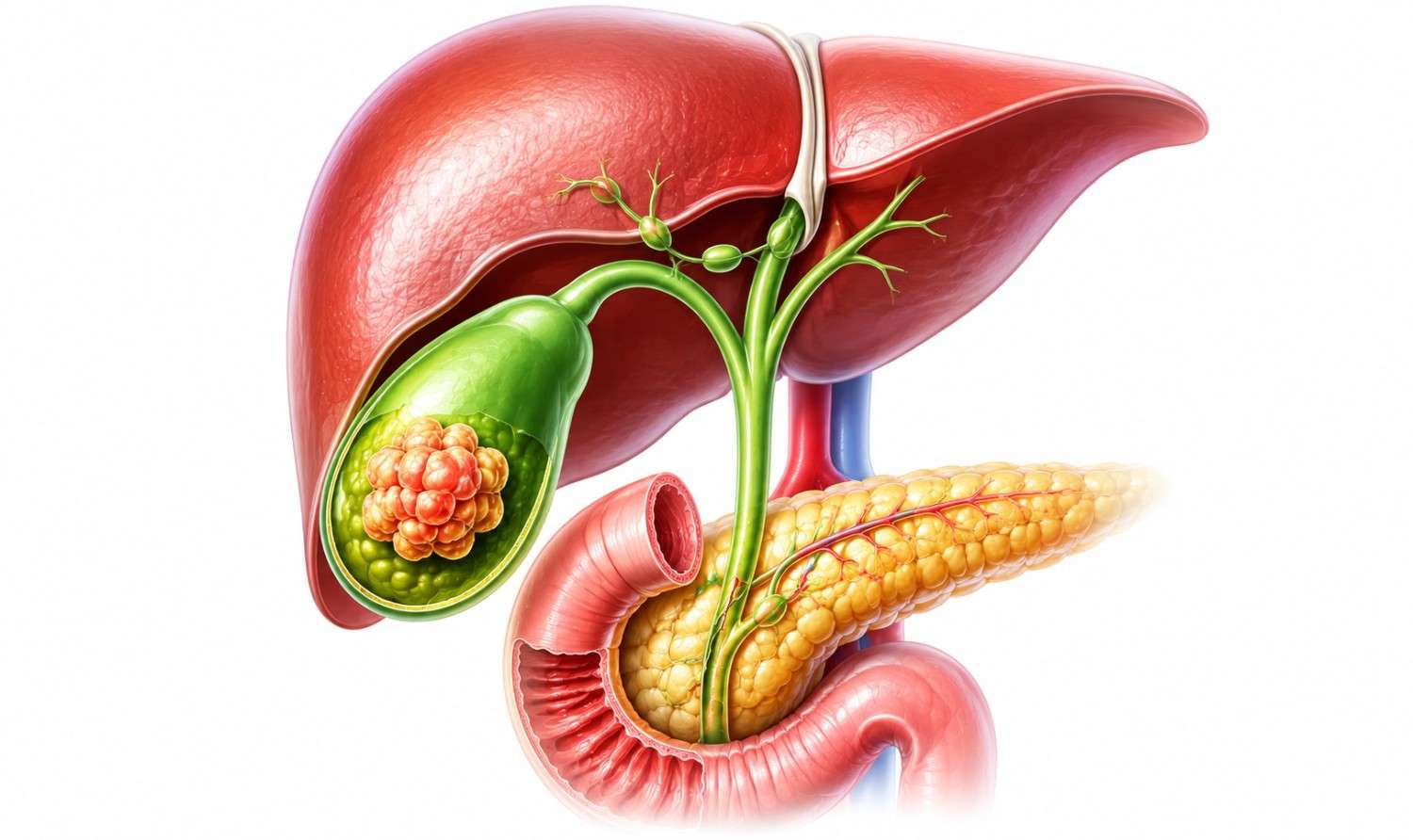
Gallbladder Cancer Surgery for Comprehensive Cancer Care
Gallbladder cancer develops when abnormal cells grow in the tissue of the gallbladder, a small, pear-shaped organ located beneath the liver that stores bile and helps with fat digestion. Because the gallbladder is located close to the liver and bile ducts, the disease can involve these nearby structures. Symptoms may be subtle or absent in the early stages, making specialist evaluation important for accurate diagnosis and staging.
Dr. Manish Jain is a GI & HPB Oncosurgeon who provides specialist evaluation for patients with gallbladder and gastrointestinal cancers. He consults at the Gastro & HPB Surgery Center in Moti Nagar, West Delhi. Treatment planning is based on individual diagnostic findings, cancer stage, tumour location, overall health, and whether the disease can be surgically removed.
What Is Gallbladder Cancer Surgery?
Gallbladder cancer surgery involves the surgical removal of the gallbladder and, depending on the extent of disease, may also involve nearby liver tissue, bile duct, or lymph nodes. Surgery is one part of a broader cancer treatment plan that may also include chemotherapy or radiation therapy in selected cases. Whether surgery is appropriate, and what it involves, depends on the cancer's stage, the tumour's location, whether the cancer can be surgically removed, the patient's overall health, and other treatments being considered.
When May Gallbladder Cancer Surgery
Be Recommended?
Surgery may be considered based on several factors assessed during specialist evaluation, including:
The stage of the cancer
The location of the tumour
The extent of disease, including involvement of surrounding structures
Whether the cancer is resectable (can be surgically removed)
The patient's overall health
Any previous treatment received
These factors are considered together, after appropriate evaluation, on an individual case basis.
Types of Surgery for Gallbladder Cancer
Cholecystectomy (Gallbladder Removal)
In selected circumstances, treatment may involve removal of the gallbladder. In some cases, this is extended to include a margin of nearby liver tissue and lymph nodes, depending on the stage and extent of the cancer.
Liver and Lymph Node Involvement
Because gallbladder cancer can extend to nearby structures, surgical planning may need to account for the liver and regional lymph nodes, based on individual staging.
Medical Assessment Note: The extent of surgery depends on the stage, location and spread of the cancer, as well as the patient's overall health and surgical suitability. The appropriate surgical plan is determined after detailed specialist evaluation.
How Is Gallbladder Cancer
Treatment Planned?
Treatment planning is individualised and depends on the cancer's stage, tumour location, extent of disease, overall health, resectability, and other treatments that may be appropriate.
Cancer stage
Tumour location
Extent of disease
Whether the cancer is resectable
Overall health
Previous treatment
Need for chemotherapy
Need for radiation therapy
Diagnosis and Staging Before Gallbladder Cancer Surgery
Depending on the case, doctors may recommend a combination of investigations to understand the extent of disease and plan appropriate treatment. These can include ultrasound, CT scan, MRI/MRCP, blood tests, and biopsy in selected situations. Not every patient requires every test — the treating surgeon determines what is relevant to each individual case. Staging helps specialists understand the extent of disease and guide treatment planning.
What Happens During Gallbladder Cancer Surgery?
The exact procedure varies depending on the cancer's stage, the tumour's location, the extent of disease, and the patient's overall health. The surgical team explains the planned operation and what to expect before surgery takes place; this page is intended for general patient education rather than detailed surgical instruction.
Recovery After Gallbladder Cancer Surgery
Recovery generally involves a period of hospital-based monitoring, pain management, gradual return to normal diet, progressive mobility, wound care, and follow-up appointments. Pathology results are reviewed after surgery to guide any further treatment that may be needed. Recovery varies from patient to patient, depending on the extent of surgery and individual health factors.
Risks and Considerations of Gallbladder Cancer Surgery
As with any major cancer surgery, gallbladder cancer surgery carries potential risks that should be discussed individually with the treating surgeon. Depending on the procedure, these can include bleeding, infection, blood clots, anaesthesia-related complications, bile leakage, injury to the bile duct or nearby organs, liver-related complications, and digestive or nutritional changes. The surgeon will discuss the potential benefits, risks and alternatives based on the individual patient's condition.
Gallbladder Cancer Surgery in West Delhi
Patients looking for gallbladder cancer surgery in West Delhi can consult Dr. Manish Jain at the Gastro & HPB Surgery Center in Moti Nagar for evaluation and discussion of appropriate treatment options. The clinic's location on Shivaji Marg is within reach of nearby West Delhi neighbourhoods including Punjabi Bagh, Rajouri Garden, Kirti Nagar, and Patel Nagar, in addition to Moti Nagar itself. Patients from across Delhi are also welcome to consult at this location, with hospital-based care coordinated through Dr. Jain's affiliation with BLK-Max Super Speciality Hospital where required.
Why Specialist Evaluation Matters in Gallbladder Cancer
Because gallbladder cancer can involve nearby structures such as the liver and bile ducts, accurate diagnosis and staging are important for understanding the full extent of disease. Specialist evaluation helps assess whether surgery is a suitable option, clarifies the treatment options available, and supports individualised treatment planning and follow-up care.
Frequently Asked Questions
It is a surgical procedure to remove the gallbladder and, where relevant, nearby liver tissue or lymph nodes, as part of a broader cancer treatment plan.
This depends on the cancer's stage, tumour location, extent of disease, and whether the cancer is resectable, as assessed during specialist evaluation.
Approaches can range from cholecystectomy to more extended surgery involving nearby liver tissue or lymph nodes, depending on the individual case.
No. Suitability depends on the cancer's stage, its extent, and the patient's overall health, and is determined through specialist evaluation.
Depending on the case, this may include ultrasound, CT scan, MRI/MRCP, blood tests, and biopsy in selected situations.
It refers to gallbladder removal extended to include a margin of nearby liver tissue and lymph nodes, used in selected cases depending on the extent of disease.
Recovery varies from patient to patient depending on the extent of surgery and individual health factors, and is guided by the surgical team during follow-up.
General risks can include bleeding, infection, blood clots, anaesthesia-related complications, bile leakage, and injury to nearby structures; individual risks should be discussed with the surgeon.
Yes, seeking a second opinion is a reasonable step, and Dr. Manish Jain is available for consultation for this purpose.
Dr. Manish Jain consults at the Gastro & HPB Surgery Center, Sree Jee Gastro & Liver Clinic, in Moti Nagar, West Delhi.
Call the Moti Nagar clinic directly at +91 89290 60060 to schedule a consultation with Dr. Manish Jain.