
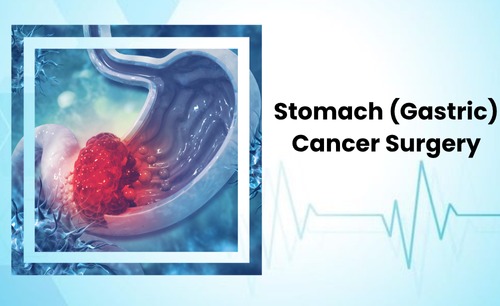
Stomach Cancer Surgery
Stomach cancer is a significant health concern in India and often develops silently over several years, starting in the lining of the stomach before spreading deeper or to nearby organs and lymph nodes. Common risk factors include Helicobacter pylori infection, chronic gastritis, smoking, high‑salt or smoked foods, family history, older age, and certain hereditary syndromes such as Lynch syndrome and FAP.
The most common type is adenocarcinoma (including intestinal and diffuse subtypes), but other forms such as gastrointestinal stromal tumors (GISTs), lymphomas, and neuroendocrine tumors can also arise in the stomach and require specialized evaluation. Symptoms may include persistent indigestion, early fullness, unexplained weight loss, loss of appetite, abdominal pain, vomiting, or blood in vomit or stool, which should prompt early consultation and endoscopic assessment.
Stomach cancer surgery involves removing part or all of the stomach to eliminate cancer and prevent its spread. The procedure may also include the removal of nearby lymph nodes and is often combined with other treatments like chemotherapy for better outcomes. At BLK‑Max Super Speciality Hospital, New Delhi, Dr. Manish Jain — a leading GI Oncosurgeon and Surgical Gastroenterologist — offers advanced stomach cancer surgery with a focus on complete cancer clearance, minimally invasive techniques, and organ‑function preservation, delivering some of the best treatment in Delhi NCR for gastric cancer patients.
India is known for providing world‑class stomach cancer treatment at comparatively affordable costs, and patients from across the country and abroad travel to Delhi NCR to seek care from experienced specialists like Dr. Manish Jain for comprehensive and cost‑effective treatment pathways. This combination of expertise, technology, and value makes him one of the best doctors in Delhi NCR for stomach cancer surgery and multidisciplinary gastric cancer management.
Recovery Timeline
- Hospital stay: 7–10 days
- Return to normal diet: within 2 weeks
- Resume work: 4–6 weeks
- Full recovery: 8–12 weeks
After stomach cancer surgery (subtotal or total gastrectomy), most patients typically remain in the hospital for about 7–10 days, depending on their overall health, the extent of surgery, and whether a minimally invasive (laparoscopic or robotic) approach was used. Enhanced recovery protocols, early mobilization, and careful pain management help patients sit up, walk, and gradually resume oral intake within the first few days after surgery.
A soft or modified diet is usually started under supervision and built up towards a more normal diet over about 2 weeks, although eating patterns change permanently after gastrectomy, especially with smaller, more frequent meals. Many patients can return to light or office work within 4–6 weeks, while full internal healing, strength recovery, and adaptation to new dietary habits may take 8–12 weeks or longer, particularly after total gastrectomy. Under Dr. Manish Jain’s care, patients in Delhi NCR receive individualized recovery plans aimed at safe, timely return to daily activities.
Diet and Lifestyle
- Small, frequent meals
- Avoid high-fat/high-sugar foods
- Stay hydrated
- Regular follow-ups
After stomach cancer surgery, nutrition becomes a key part of recovery, as the stomach’s reduced capacity or complete removal requires major adjustments in how and what patients eat. Small, frequent meals help prevent discomfort, dumping syndrome, and rapid blood sugar swings, while chewing food thoroughly and eating slowly can improve digestion and nutrient absorption
High‑fat and high‑sugar foods are best limited, as they can cause bloating, cramping, diarrhea, or dizziness after gastrectomy. Staying well‑hydrated throughout the day is essential, but fluids are often taken between meals rather than with them to avoid early fullness. Over time, a balanced diet rich in protein, vitamins, and minerals — often supported by a dietitian — helps maintain weight and strength, and vitamin B12 or other supplements may be needed after total gastrectomy. Regular follow‑ups with Dr. Manish Jain and his multidisciplinary team ensure ongoing monitoring, dietary guidance, and early management of any nutritional or metabolic issues.
Diagnostic Tests
- Endoscopy with biopsy
- CT Scan (Abdomen & Pelvis)
- PET Scan
- Endoscopic Ultrasound (EUS)
- Diagnostic laparoscopy.
Upper GI endoscopy with biopsy is the primary test to diagnose stomach cancer, allowing direct visualization of the tumor and sampling of suspicious areas for histopathology. CT scans of the abdomen and pelvis help assess the local extent of disease, lymph node involvement, and spread to organs such as the liver or peritoneum, which is essential for staging and surgical planning.
PET‑CT can be used in selected patients to detect metabolically active disease and distant metastases, refining stage assessment and guiding treatment decisions. Endoscopic ultrasound (EUS) provides high‑resolution images to estimate how deeply the tumor has invaded the stomach wall and nearby lymph nodes, especially in early or borderline‑resectable cases. Diagnostic laparoscopy is frequently performed before definitive surgery to identify small peritoneal deposits or occult metastases not visible on imaging, helping avoid non‑beneficial laparotomy and refine the surgical strategy. Dr. Manish Jain uses this comprehensive diagnostic work‑up at BLK‑Max to plan precise, stage‑appropriate surgery and systemic therapy, offering best‑practice stomach cancer treatment in Delhi NCR
Treatment
- Perioperative Chemotherapy: Regimens like FLOT (fluorouracil, leucovorin, oxaliplatin, docetaxel) are standard in Western populations, given before and after surgery to improve outcomes.
- Adjuvant Chemotherapy: S-1 or XELOX/CAPOX (capecitabine plus oxaliplatin) are commonly used in Eastern populations after surgery.
- Chemoradiation: Postoperative chemoradiation (e.g., with 5-FU/Leucovorin) may be recommended, especially if D2 lymph node dissection was not performed or if margins are positive.
- Targeted Therapy & Immunotherapy: Emerging role for HER2-targeted therapy and immunotherapy (e.g., Pembrolizumab, Durvalumab) in combination with chemotherapy for advanced or perioperative settings.
Perioperative Chemotherapy: Regimens like FLOT (fluorouracil, leucovorin, oxaliplatin, docetaxel) are standard in Western populations, given before and after surgery to improve outcomes.
Adjuvant Chemotherapy: S‑1 or XELOX/CAPOX (capecitabine plus oxaliplatin) are commonly used in Eastern populations after surgery.
Chemoradiation: Postoperative chemoradiation (e.g., with 5‑FU/Leucovorin) may be recommended, especially if D2 lymph node dissection was not performed or if margins are positive.
Targeted Therapy & Immunotherapy: Emerging role for HER2‑targeted therapy and immunotherapy (e.g., Pembrolizumab, Durvalumab) in combination with chemotherapy for advanced or perioperative settings.
Surgery remains the cornerstone of cure for localized stomach cancer, and perioperative chemotherapy with regimens such as FLOT has been shown to improve survival by shrinking the tumor before surgery and eradicating microscopic disease afterward. In many patients, adjuvant chemotherapy with regimens like S‑1 or CAPOX/XELOX is used post‑operatively, particularly in settings with extensive lymph node dissection, to further reduce recurrence risk.
Postoperative chemoradiation is considered when lymph node clearance is suboptimal or surgical margins are close or positive, with the aim of enhancing local control. For advanced or metastatic disease, targeted therapies (for example, HER2‑directed agents in HER2‑positive tumors) and immunotherapy (such as PD‑1/PD‑L1 inhibitors) are increasingly integrated into treatment, often in combination with chemotherapy, based on tumor biology and international guidelines. At BLK‑Max Super Speciality Hospital, Dr. Manish Jain follows a multidisciplinary, evidence‑based approach to combine surgery, systemic therapy, and radiation as needed, providing some of the best treatment in Delhi NCR for complex stomach cancer cases.
Surgical Options
- Subtotal Gastrectomy: Removal of a part of the stomach.
- Total Gastrectomy: Removal of the entire stomach.
- D2 Lymphadenectomy: Extensive removal of regional lymph nodes, crucial for complete cancer clearance.
- Minimally Invasive Approaches: Laparoscopic or robotic gastrectomy for suitable cases, leading to quicker recovery.
Subtotal gastrectomy is typically used when the tumor is located in the lower part of the stomach, allowing removal of the diseased segment while preserving a functional gastric remnant and ensuring adequate margins. Total gastrectomy is preferred for more proximal, diffuse, or extensive lesions, removing the entire stomach along with nearby tissues and reconstructing the digestive tract to maintain continuity.
D2 lymphadenectomy — the systematic removal of regional lymph node stations — is considered a standard oncologic component of curative gastrectomy in experienced centers because it improves staging accuracy and can enhance long‑term outcomes when performed safely. Minimally invasive approaches, including laparoscopic and robotic gastrectomy with D2 lymphadenectomy, have been shown to offer comparable oncologic results with potential benefits such as reduced pain, less blood loss, and faster recovery in appropriately selected patients.
As a highly experienced GI Oncosurgeon and robotic specialist, Dr. Manish Jain routinely performs complex subtotal and total gastrectomies with D2 lymph node dissection at BLK‑Max Super Speciality Hospital, New Delhi, using laparoscopic and robotic platforms where suitable. This depth of expertise positions him among the best doctors in Delhi NCR for advanced stomach cancer surgery and comprehensive gastric cancer care.
Symptoms and Diagnosis

Unexplained weight loss

Persistent indigestion or heartburn

Nausea or vomiting

Loss of appetite

Abdominal pain or discomfort
FAQ
No FAQs available at the moment.