
Rectum Cancer Surgeon in Delhi-Dr Manish Jain
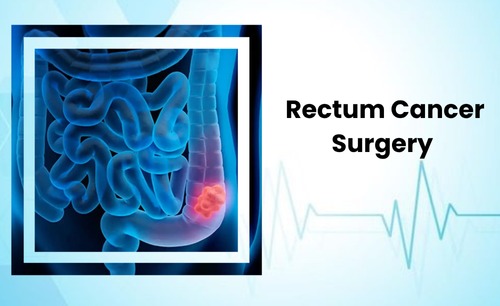
Rectum cancer surgery involves removing the tumor and nearby tissues to prevent cancer spread. Minimally invasive and sphincter-saving techniques are often used to aid recovery and preserve normal bowel function.
Rectal
cancer develops in the last part of the large intestine, just above the anus,
and is considered a type of colorectal cancer. Because the rectum is located in
a narrow pelvic space and closely related to nerves controlling bowel, bladder,
and sexual function, rectum cancer surgery demands high precision and planning.
Common
warning signs include blood in stool, a persistent change in bowel habits, a
feeling of incomplete evacuation, abdominal pain or cramping, unexplained
weight loss, fatigue, and iron‑deficiency anemia. These symptoms can overlap
with benign conditions such as piles, so any ongoing rectal bleeding, altered
stool pattern, or new-onset anemia should be evaluated with colonoscopy and
imaging for early diagnosis.
Although
colon and rectal cancers are both grouped as colorectal cancer, rectal cancer
often needs a different treatment pathway, typically involving a combination of
chemotherapy and radiotherapy before surgery, while colon cancer is more
commonly treated with surgery first. Early detection of rectal cancer
simplifies treatment, reduces overall cost and treatment burden, and improves
cure rates, making timely screening essential for people over 45 or those with
a family history and lifestyle risk factors.
As a
leading GI oncosurgeon and robotic surgeon in Delhi NCR, Dr. Manish Jain offers
advanced rectum cancer surgery with a strong focus on sphincter preservation,
minimally invasive approaches, and oncologically safe margins at BLK-Max Super
Speciality Hospital, New Delhi. His individualized treatment plans combine
surgery with modern chemoradiotherapy protocols to deliver some of the best
rectal cancer treatment options in Delhi NCR.
Recovery Timeline
- Hospital stay: 5–7 days
- Return to normal diet: within 1 week
- Resume work: 4–6 weeks
- Full recovery: 8–10 weeks
After
rectum cancer surgery, most patients stay in the hospital for about 5–7 days,
depending on the complexity of surgery, use of minimally invasive or robotic techniques, and overall health status. Enhanced recovery protocols aim to help
patients sit up, walk, and start oral intake early, which supports faster bowel
recovery and reduces complications.
A normal or near-normal diet is usually reintroduced within about a week, starting with easy-to-digest foods as bowel function returns. Many patients can resume office-based work in 4–6 weeks, but complete internal healing and full recovery of strength may take 8–10 weeks or longer, especially after major rectal resections or if chemoradiation is also required
Diet and Lifestyle
- Start with soft
- Low-fiber diet
- Gradually reintroduce fiber
- Stay hydrated and avoid processed foods
- Avoid processed foods
- Regular follow-ups with CEA monitoring and colonoscopy surveillance
Immediately
after surgery, patients are usually advised to start with soft foods and a
low-fiber diet to reduce strain on the healing anastomosis and ease bowel
movements. Over time, fiber is gradually reintroduced to promote regularity,
improve stool consistency, and support long-term bowel health.
Good
hydration is essential to prevent constipation and support recovery, especially
if a stoma or ileostomy is temporarily present. In the long term, a balanced
diet rich in fruits, vegetables, whole grains, and lean proteins, with limited
processed meats, high-fat foods, and excess sugar, is recommended to support
overall health and may help reduce recurrence risk.
Regular
follow-ups with CEA monitoring and colonoscopy surveillance are crucial to
detect any recurrence or new lesions at an early stage and to manage long-term
functional issues such as bowel habit changes. At BLK-Max Super Speciality
Hospital, Dr. Manish Jain and his team provide structured survivorship and
follow-up protocols tailored to each rectal cancer patient.
Diagnostic Tests
- Colonoscopy with biopsy
- MRI (to assess local spread and lymph nodes)
- CT Scan (Chest, Abdomen, Pelvis)
- CEA Blood Test
- Endoscopic Ultrasound (EUS)
A
colonoscopy with biopsy is the primary test to visualize the rectum, identify
suspicious lesions, and obtain tissue samples to confirm rectal cancer. MRI of
the pelvis plays a key role in mapping the exact location of the tumor, its
depth of invasion, and lymph node involvement, which is critical for planning
sphincter-preserving surgery and deciding the need for neoadjuvant treatment.
CT scans of the chest, abdomen, and pelvis help check whether the cancer has spread to distant organs such as the liver or lungs, thereby guiding staging and treatment planning. CEA blood tests are used as a tumor marker to monitor treatment response and follow-up, while endoscopic ultrasound (EUS) can provide detailed local staging information for selected early tumors, helping identify patients who may be suitable for organ-preserving approaches
Treatment
- Neoadjuvant Therapy (Total Neoadjuvant Treatment - TNT): A modern approach where all chemotherapy and radiation are given before surgery. This can involve short-course radiation followed by chemotherapy (e.g., FOLFOX or CAPOX) or long-course chemoradiation followed by chemotherapy. TNT can improve tumor regression and increase the chance of organ preservation.
- Immunotherapy: For dMMR/MSI-H rectal cancers, immunotherapy has shown remarkable complete responses, potentially allowing some patients to avoid surgery, chemotherapy, and radiation.
Total
neoadjuvant treatment (TNT) has emerged as a standard option for many locally
advanced rectal cancers, delivering chemotherapy and radiotherapy upfront to
shrink the tumor, treat microscopic distant disease early, and improve
completion rates of systemic therapy. Studies show that TNT is associated with
higher rates of complete pathological response, better disease-free survival,
and fewer distant metastases compared with conventional chemoradiation followed
by surgery and adjuvant chemotherapy.
For
patients whose tumors have dMMR or MSI-H biology, immunotherapy has produced
striking responses in clinical trials, with some individuals achieving complete
clinical remission that may allow a carefully monitored, non-operative “watch
and wait” strategy in highly selected cases. Standard therapies such as
surgery, chemoradiation, and systemic chemotherapy remain the backbone of
treatment for most rectal cancer patients, but molecular profiling now enables
targeted and immunotherapy-based personalization in advanced or high-risk
disease.
Under
Dr. Manish Jain’s care, rectal cancer treatment in Delhi NCR is planned in a
multidisciplinary tumor board, integrating TNT, immunotherapy where indicated,
and advanced rectal surgery to maximize cure rates while preserving sphincter
function whenever safely possible.
Surgical Options
- Low Anterior Resection (LAR): Sphincter-preserving surgery, often with TME (Total Mesorectal Excision) for complete removal of the rectum and surrounding tissue. A temporary ileostomy may be created.
- Abdominoperineal Resection (APR) / Extralevator APR (ELAPE): For very low rectal tumors requiring removal of the anus and creation of a permanent colostomy.
- Transanal Total Mesorectal Excision (TaTME): A minimally invasive approach performed through the anus for improved visualization and precision.
- Robotic Rectal Surgery: Offers superior visualization and instrument articulation in the narrow pelvic space, enhancing precision and sphincter preservation.
Robotic
Rectal Surgery: Offers superior visualization and instrument articulation in
the narrow pelvic space, enhancing precision and sphincter preservation.
Low
anterior resection with total mesorectal excision is the standard
sphincter-preserving operation for mid and upper rectal cancers, achieving
complete removal of the rectum and its lymphatic envelope while aiming to
maintain normal anal function. For very low tumors where sphincter preservation
is not feasible or oncologically safe, abdominoperineal resection or ELAPE is
performed, resulting in a permanent colostomy but providing reliable local
control.
Transanal TME and robotic surgery for rectal are modern minimally invasive techniques that improve access and visualization in the deep pelvis, helping surgeons achieve precise dissection with better nerve preservation and potentially improved functional outcomes. As an experienced GI oncosurgeon and robotic expert in Delhi NCR, Dr. Manish Jain offers the full spectrum of rectal cancer surgery options at BLK-Max Super Speciality Hospital, with a strong focus on minimally invasive, sphincter-saving procedures and individualized, high-quality rectal cancer care.
Symptoms and Diagnosis

Rectal bleeding or blood in stool

Abdominal pain or discomfort

Unexplained weight loss

Fatigue or weakness

Change in bowel habits

Tenesmus (feeling of incomplete evacuation).
FAQ
No FAQs available at the moment.