
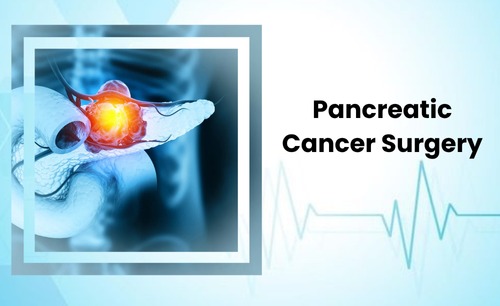
Pancreatic Cancer Surgery
Pancreatic cancer is a serious condition in which normal pancreatic cells start behaving abnormally, grow uncontrollably, and gradually invade nearby tissues and distant organs. In the early stages it is rarely detected because symptoms are often vague or absent, which is why many patients are diagnosed only when the disease has progressed locally or spread to other parts of the body. As the tumor grows, patients may develop upper abdominal or back pain, weight loss, loss of appetite, jaundice, nausea, vomiting, fatigue, or abdominal distension, all of which warrant prompt medical evaluation.
The exact cause is not always clear, but age above 60, smoking or tobacco use, family history of pancreatic cancer, obesity, certain hereditary syndromes (such as BRCA mutations or Lynch syndrome), and exposure to specific industrial or chemical agents are recognized risk factors. Pancreatic cancer is staged from I to IV based on tumor size, local spread, lymph node involvement, and distant metastasis; early stages are potentially curable with surgery, while advanced stages often need systemic and palliative treatments to control symptoms and improve quality of life.
Treatment options depend heavily on stage and resectability and may include surgery, chemotherapy, radiation therapy, or a combination of these, often delivered in a multimodality sequence. In Delhi NCR, patients benefit from access to advanced pancreatic cancer treatment, including neoadjuvant protocols, complex pancreatic resections, and high‑quality postoperative care. At BLK‑Max Super Speciality Hospital, New Delhi, Dr. Manish Jain — a leading GI Oncosurgeon and HPB Surgical Gastroenterologist — offers comprehensive, protocol‑driven pancreatic cancer care, making him one of the best doctors in Delhi NCR for pancreatic cancer surgery and multidisciplinary management, and providing some of the best treatment in Delhi NCR for both early and advanced pancreatic tumors.
Pancreatic cancer surgery involves removing the tumor from the pancreas, often through a procedure like the Whipple surgery. It is typically performed when the cancer is localized and offers the best chance for long-term survival.
Recovery Timeline
- Hospital stay: 7–10 days
- Return to normal diet: within 2 weeks
- Resume work: 4–6 weeks
- Full recovery: 8–12 weeks
- Recovery after pancreatic cancer surgery, especially major operations like the Whipple procedure, is gradual and requires careful inpatient monitoring. Most patients remain in the hospital for 7–10 days so that the team can closely watch pain control, drain output, pancreatic and biliary function, and early nutrition. During this time, patients are encouraged to start mobilizing early, sit up, walk with assistance, and gradually transition from IV fluids to oral intake.
A soft or modified diet is usually reintroduced over the first 1–2 weeks, depending on how the digestive system adapts to the new anatomy, and many patients can return to light work or office activities within 4–6 weeks if recovery is smooth. Full recovery of strength, stamina, and internal healing often takes 8–12 weeks or longer, especially if additional chemotherapy is planned. Under the care of Dr. Manish Jain at BLK‑Max, New Delhi, recovery timelines and rehabilitation plans are tailored to each patient to support safe healing and timely return to normal life.
Diet and Lifestyle
- Small, frequent meals
- Avoid high-fat/high-sugar foods
- Pancreatic enzyme supplements are often required
- Stay hydrated
- Avoid alcohol
- Regular follow-ups with imaging and CA 19-9 monitoring
After pancreatic cancer surgery, especially when part of the pancreas and surrounding structures have been removed, digestion changes significantly. Small, frequent meals help reduce discomfort, avoid overloading the digestive system, and maintain stable energy levels throughout the day. High‑fat and high‑sugar foods can be difficult to digest and may worsen symptoms such as bloating, diarrhea, or steatorrhea, so limiting these is usually recommended.
Because the pancreas produces enzymes critical for digestion, many patients need pancreatic enzyme supplements with meals to help break down food and absorb nutrients properly. Staying well hydrated supports overall recovery and bowel function, while complete avoidance of alcohol is essential to protect the remaining pancreas and liver. Regular follow‑ups with imaging and CA 19‑9 tumor marker monitoring are vital to detect recurrence early, adjust systemic treatment when needed, and manage long‑term nutritional or metabolic issues. At BLK‑Max Super Speciality Hospital, Dr. Manish Jain’s team provides structured dietary counselling and survivorship care as part of comprehensive pancreatic cancer treatment in Delhi NCR.
Diagnostic Tests
- Endoscopic Ultrasound (EUS) with biopsy
- CT Scan (Abdomen) with contrast
- MRI/MRCP
- CA 19-9 Blood Test (tumor marker)
- PET Scan
After pancreatic cancer surgery, especially when part of the pancreas and surrounding structures have been removed, digestion changes significantly. Small, frequent meals help reduce discomfort, avoid overloading the digestive system, and maintain stable energy levels throughout the day. High‑fat and high‑sugar foods can be difficult to digest and may worsen symptoms such as bloating, diarrhea, or steatorrhea, so limiting these is usually recommended.
Because the pancreas produces enzymes critical for digestion, many patients need pancreatic enzyme supplements with meals to help break down food and absorb nutrients properly. Staying well hydrated supports overall recovery and bowel function, while complete avoidance of alcohol is essential to protect the remaining pancreas and liver. Regular follow‑ups with imaging and CA 19‑9 tumor marker monitoring are vital to detect recurrence early, adjust systemic treatment when needed, and manage long‑term nutritional or metabolic issues. At BLK‑Max Super Speciality Hospital, Dr. Manish Jain’s team provides structured dietary counselling and survivorship care as part of comprehensive pancreatic cancer treatment in Delhi NCR.
Treatment
- Neoadjuvant Therapy: Chemotherapy (e.g., FOLFIRINOX, Gemcitabine/nab-paclitaxel), often with or without radiation therapy, is increasingly used before surgery for localized pancreatic cancer to improve resectability and outcomes.
- Multiagent Chemotherapy: Cornerstones of treatment for metastatic disease.
- Targeted Therapies: For specific molecular alterations (e.g., BRCA1/2, BRAF V600E, KRAS G12C, MSI-H/TMB-H).
Because pancreatic cancer is aggressive and often diagnosed at an advanced stage, modern treatment protocols frequently use multimodality strategies. Neoadjuvant therapy with regimens such as FOLFIRINOX or gemcitabine plus nab‑paclitaxel — sometimes combined with radiation — is increasingly offered even to patients with seemingly operable disease to shrink the tumor, treat microscopic spread early, and improve the chances of a complete (R0) resection. In borderline‑resectable or locally advanced tumors, this approach can convert more patients into surgical candidates and improve long‑term outcomes.
For metastatic pancreatic cancer, multiagent chemotherapy remains the mainstay of treatment, aiming to control disease, relieve symptoms, and prolong survival. Molecular profiling of the tumor is becoming more important, as it can identify actionable mutations such as BRCA1/2, BRAF V600E, KRAS G12C, or MSI‑H/TMB‑H, which may respond to specific targeted therapies or immunotherapy. Throughout the treatment journey, Dr. Manish Jain coordinates closely with medical oncologists and radiation oncologists at BLK‑Max Super Speciality Hospital, New Delhi, to deliver guideline‑based, individualized plans that represent some of the best treatment in Delhi NCR for pancreatic cancer across all stages.
Surgical Options
- Whipple's Procedure (Pancreaticoduodenectomy): Complex surgery for tumors in the head of the pancreas, involving removal of the pancreatic head, duodenum, part of the bile duct, and gallbladder, followed by reconstruction.
- Distal Pancreatectomy: Removal of the tail and sometimes the body of the pancreas, often with splenectomy. Can be performed laparoscopically or robotically.
- Central Pancreatectomy: Removal of the mid-portion of the pancreas, preserving the head and tail.
Surgery for pancreatic cancer is technically demanding and must respect both oncologic principles and delicate vascular and biliary anatomy. The Whipple’s procedure (pancreaticoduodenectomy) is the standard operation for cancers located in the head of the pancreas and includes removal of the pancreatic head, duodenum, part of the bile duct, gallbladder, and sometimes a portion of the stomach, with careful reconstruction to restore the flow of food, bile, and pancreatic juice. Distal pancreatectomy is used for tumors in the body or tail of the pancreas and frequently involves removal of the spleen; in suitable patients, this can be carried out using laparoscopic or robotic techniques for smaller incisions and faster recovery.
Central pancreatectomy is a more limited, parenchyma‑sparing procedure for select tumors in the mid‑portion of the pancreas, aiming to preserve both endocrine and exocrine function by retaining the head and tail. As an experienced GI Oncosurgeon and HPB specialist in Delhi NCR, Dr. Manish Jain performs these complex pancreatic operations — including minimally invasive distal and central pancreatectomies and advanced Whipple’s procedures — at BLK‑Max Super Speciality Hospital, with a strong focus on safety, precision, and long‑term outcomes. His expertise and multidisciplinary support make him one of the best doctors in Delhi NCR for pancreatic cancer surgery and comprehensive HPB oncology care.
Symptoms and Diagnosis

Jaundice (yellowing of skin and eyes)

Abdominal pain or discomfort (often radiating to the back)

Nausea or vomiting

Loss of appetite

Unexplained weight loss

New-onset diabetes
FAQ
No FAQs available at the moment.