
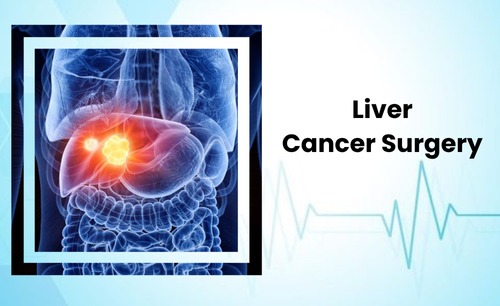
Liver Cancer Surgery
The liver is one of the body’s most vital organs, responsible for detoxifying the blood, producing bile for digestion, storing nutrients, and supporting metabolism. Liver cancer develops when abnormal cells in the liver grow uncontrollably, and it may arise primarily in the liver (primary liver cancer) or spread from cancers elsewhere in the body (secondary or metastatic liver cancer).
The most common primary liver cancer is hepatocellular carcinoma (HCC), usually associated with chronic liver diseases such as hepatitis B or C infection, cirrhosis, or fatty liver disease. Other types include intrahepatic cholangiocarcinoma (bile duct cancer), rare vascular tumors like angiosarcoma, and hepatoblastoma, which predominantly affects young children. Because early liver cancer may cause few or no symptoms, many patients present later with signs such as unexplained weight loss, loss of appetite, right upper abdominal pain or swelling, jaundice, fatigue, dark urine, and pale stools.
Surgery is often the best curative option when liver cancer is detected early and confined, offering a realistic chance of long-term control or cure. In Delhi NCR, advanced liver cancer surgery and multidisciplinary care are available at tertiary centers like BLK-Max Super Speciality Hospital, New Delhi, where Dr. Manish Jain — a leading GI Oncosurgeon and HPB Surgical Gastroenterologist — provides state-of-the-art liver cancer surgery and systemic treatments, positioning him among the best doctors in Delhi NCR for comprehensive liver cancer management and some of the best treatment in Delhi NCR for both HCC and intrahepatic cholangiocarcinoma.
Liver cancer surgery involves removing the cancerous portion of the liver through a procedure called liver resection. It is typically used when the tumor is confined and the remaining liver is healthy enough to function properly.
Recovery Timeline
- Hospital stay: 5–7 days
- Return to normal diet: within 1 week
- Resume work: 4–6 weeks
- Full recovery: 8–10 weeks
A normal or near-normal diet is often reintroduced within about a week, tailored to the patient’s liver status and overall health, and many people can resume light or office work within 4–6 weeks if recovery is smooth. Full internal healing and return to pre-surgery energy levels usually take 8–10 weeks or longer, depending on the extent of resection, underlying liver disease, and any additional therapies like systemic treatment. Under Dr. Manish Jain’s care at BLK-Max, Delhi NCR, recovery protocols are individualized to support safe healing, early mobilization, and timely follow-up
Diet and Lifestyle
- Small, frequent meals
- Avoid high-fat/high-sugar foods
- Stay hydrated
- Avoid alcohol
- Regular follow-ups with imaging and tumor marker monitoring
After liver cancer surgery, nutrition and lifestyle changes play a crucial role in supporting liver regeneration and overall recovery. Small, frequent meals rich in lean protein, complex carbohydrates, and healthy fats help maintain energy and aid tissue repair without overburdening the digestive system. High-fat, very sugary, or ultra-processed foods are best minimized, as they can worsen metabolic stress on the healing liver and contribute to fatty changes.
Adequate hydration is essential for circulation, kidney function, and metabolism, while complete avoidance of alcohol is strongly recommended, particularly in patients with underlying liver disease or cirrhosis. Regular follow-ups with imaging (such as ultrasound, CT, or MRI) and tumor marker monitoring (e.g., AFP for HCC) are critical to detect recurrence early and guide any additional treatments. At BLK-Max Super Speciality Hospital, Dr. Manish Jain and his multidisciplinary team provide structured post-surgery surveillance and lifestyle counselling as part of long-term liver cancer care in Delhi NCR.
Diagnostic Tests
- Triphasic CT/MRI (to assess tumor and liver anatomy)
- AFP Blood Test (tumor marker for HCC)
- PET Scan, biopsy (if necessary)
Triphasic CT or contrast-enhanced MRI of the liver is central to diagnosing and staging primary liver cancers, as it assesses tumor size, number, vascular involvement, and the amount of healthy liver that will remain after surgery. These scans also help identify portal vein thrombosis, satellite nodules, and anatomical variants that influence the safety and extent of resection.
AFP (alpha-fetoprotein) is a commonly used blood tumor marker for hepatocellular carcinoma and can support diagnosis, risk stratification, and surveillance, especially when combined with imaging findings. PET scans may be used in selected cases to detect extrahepatic spread or clarify equivocal lesions, and biopsy is reserved for situations where imaging and markers are inconclusive or when systemic therapy decisions require histological confirmation. Dr. Manish Jain utilizes this comprehensive diagnostic work-up at BLK-Max Delhi to determine whether liver resection, transplantation referral, ablation, or systemic therapy will provide the best treatment in Delhi NCR for each individual patient.
Treatment
- Systemic Therapies for Advanced HCC: Immunotherapy combinations (e.g., Atezolizumab + Bevacizumab, Durvalumab + Tremelimumab) or targeted therapies (e.g., Sorafenib, Lenvatinib) are standard first-line treatments for unresectable or metastatic hepatocellular carcinoma (HCC).
- Neoadjuvant/Adjuvant Therapy for HCC: Adjuvant immunotherapy (e.g., Atezolizumab + Bevacizumab) is emerging for high-risk HCC after resection/ablation, showing improved recurrence-free survival. Neoadjuvant immunotherapy is also being explored.
- Systemic Therapy for Intrahepatic Cholangiocarcinoma (IHC): Chemotherapy (Cisplatin + Gemcitabine) combined with immunotherapy (Durvalumab) is standard for advanced IHC. Targeted therapies are crucial for specific genetic mutations (e.g., IDH1, FGFR2).
- Radiation Therapy: External beam radiation therapy (EBRT) may be used for localized or locally advanced HCC/IHC, or as a bridge to transplant.
Systemic Therapies for Advanced HCC: Immunotherapy combinations (e.g., Atezolizumab + Bevacizumab, Durvalumab + Tremelimumab) or targeted therapies (e.g., Sorafenib, Lenvatinib) are standard first-line treatments for unresectable or metastatic hepatocellular carcinoma (HCC).
Neoadjuvant/Adjuvant Therapy for HCC: Adjuvant immunotherapy (e.g., Atezolizumab + Bevacizumab) is emerging for high-risk HCC after resection/ablation, showing improved recurrence-free survival. Neoadjuvant immunotherapy is also being explored.
Systemic Therapy for Intrahepatic Cholangiocarcinoma (IHC): Chemotherapy (Cisplatin + Gemcitabine) combined with immunotherapy (Durvalumab) is standard for advanced IHC. Targeted therapies are crucial for specific genetic mutations (e.g., IDH1, FGFR2).
Radiation Therapy: External beam radiation therapy (EBRT) may be used for localized or locally advanced HCC/IHC, or as a bridge to transplant.
For early-stage HCC in patients with preserved liver function and no significant portal hypertension, surgical liver resection is often the preferred curative treatment, offering 5‑year survival rates of 50–70% in carefully selected cirrhotic patients. Liver transplantation provides the best long-term oncologic and functional outcome for patients within criteria such as Milan (single small tumors or limited multifocal disease) when underlying liver function is poor, as it removes both the tumor and the cirrhotic liver.
In unresectable or metastatic HCC, systemic therapy is the mainstay, with current standards including immunotherapy-based combinations (e.g., atezolizumab plus bevacizumab, or durvalumab plus tremelimumab) and multikinase inhibitors such as sorafenib or lenvatinib. For advanced intrahepatic cholangiocarcinoma, cisplatin plus gemcitabine with immunotherapy like durvalumab is now a widely adopted regimen, and molecular profiling may open the door to targeted therapies against alterations such as IDH1 or FGFR2. At BLK-Max, Dr. Manish Jain coordinates with hepatologists, medical oncologists, interventional radiologists, and transplant teams to build individualized treatment plans that align with global standards and deliver some of the best treatment in Delhi NCR for complex liver cancers.
Surgical Options
- Segmental Liver Resection: Removal of specific liver segments containing the tumor.
- Right/Left Hepatectomy: Removal of the entire right or left liver lobe.
- Non-anatomical Wedge Resection: Removal of the tumor with a margin of healthy tissue.
- Liver Transplantation: An option for select patients with early-stage HCC.
Segmental liver resection allows removal of one or more anatomical segments that harbor the tumor while preserving as much healthy liver tissue as possible, which is crucial in patients with underlying liver disease. Major hepatectomies such as right or left hepatectomy are indicated when larger portions of the liver are involved but adequate future liver remnant can be maintained, sometimes with pre-operative strategies like portal vein embolization to enhance safety.
Non-anatomical wedge resections may be used for small, peripherally located tumors in well-functioning livers, balancing oncologic clearance with maximal parenchymal preservation. Liver transplantation is the preferred surgical option for carefully selected early-stage HCC patients with decompensated cirrhosis, as it addresses both the malignancy and the diseased liver, thereby reducing recurrence risk. At BLK-Max Super Speciality Hospital, New Delhi, Dr. Manish Jain performs a wide range of liver resections — including segmental resections and major hepatectomies, often using advanced laparoscopic and robotic techniques — and works closely with transplant teams to ensure that patients in Delhi NCR receive comprehensive, world-class liver cancer surgery and care from one of the best doctors in Delhi NCR
Symptoms and Diagnosis

Loss of appetite

Unexplained weight loss

Fatigue or weakness

Jaundice (yellowing of skin/eyes)

Nausea or vomiting

Dark urine, pale stools
FAQ
No FAQs available at the moment.