
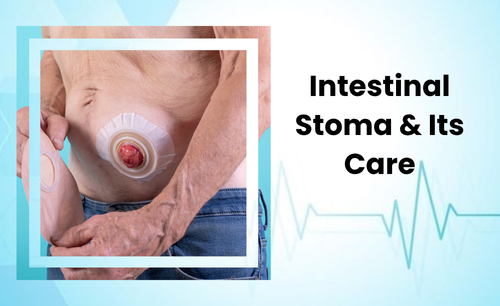
Intestinal Stoma & Its Care
A stoma is a surgically created opening on the abdomen that allows stool (colostomy, ileostomy) or urine (urostomy) to exit the body into an external pouch. This is necessary when a part of the intestine or urinary tract needs to be bypassed or removed.
Indications
Often required after complex colorectal cancer surgeries (e.g., APR for rectal cancer, total colectomy), inflammatory bowel disease, or severe injuries.
Types
- Colostomy: Stoma from the large intestine.
- Ileostomy: Stoma from the small intestine.
- Comprehensive Care: Dr. Jain's team provides complete pre-operative counseling and post-operative education on stoma management, including:
- Appliance selection and changing
- Skin care around the stoma to prevent irritation
- Dietary adjustments to manage output and odor
- Managing gas and output
- Coping strategies and resources for living with a stoma.
Recovery Timeline
- Hospital Stay: 3–10 days
- Initial Recovery: 4–6 weeks
- Stoma Adaptation: 6–8 weeks
- Full Recovery: Around 2–3 months
Diet and Lifestyle
- Eat low-fiber, soft foods initially
- Chew food well to avoid blockages
- Use skin barriers and stoma powders to avoid irritation
- Stay hydrated to maintain bowel function
Diagnostic Tests
- Colonoscopy/Endoscopy
- CT Scan / MRI
- Blood Tests
- Stool Tests
Treatment
- Reversal Surgery – In selected cases, where bowel function can be restored.
- Stoma Care & Accessories – Pouches, adhesive rings, odor filters, stoma belts, etc.
- Wound and Skin Care – To prevent irritation or infection around the stoma.
- Stoma Creation Surgery – Performed for bowel cancer, Crohn’s disease, ulcerative colitis, trauma, or blockage.
Surgical Options
- Colostomy – Large intestine (colon) is brought to the surface.
- Loop Stoma – Temporary stoma with both inflow and outflow; often reversed later.
- End Stoma – Usually permanent; involves complete redirection of bowel.
Symptoms and Diagnosis

Severe abdominal pain

Bleeding

Bowel obstruction
FAQ
No FAQs available at the moment.