
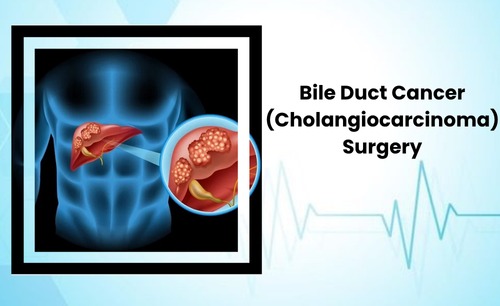
Bile Duct Cancer
Bile duct cancer, also known as cholangiocarcinoma, is a rare cancer that forms in the bile ducts, which carry bile from the liver to the small intestine. It can block bile flow, leading to symptoms like jaundice, abdominal pain, and weight loss. Early diagnosis and treatment are key for better outcomes.
Recovery Timeline
- Varies significantly based on the extent of surgery.
Diet and Lifestyle
- Often requires dietary adjustments and possibly enzyme supplements; regular follow-ups.
Diagnostic Tests
- MRCP (to visualize bile ducts)
- CT Scan (Abdomen & Pelvis)
- Endoscopic Retrograde Cholangiopancreatography (ERCP) or Percutaneous Transhepatic Cholangiography (PTC) with biopsy
- PET Scan
- Tumor markers (CEA, CA 19-9)
Treatment
- Systemic Therapy for Advanced Disease: Chemotherapy (Cisplatin + Gemcitabine) combined with immunotherapy (e.g., Durvalumab) is the standard first-line treatment for unresectable or metastatic cases.
- Targeted Therapy: Crucial for patients with specific genetic alterations (e.g., FGFR2 fusions, IDH1 mutations, HER2 amplification).
- Radiation Therapy: May be used for palliative purposes or in combination with chemotherapy.
Surgical Options
- Resection of Bile Ducts with Lymphadenectomy: For early-stage tumors.
- Partial Hepatectomy: If the tumor involves parts of the liver.
- Whipple's Procedure: For tumors in the distal bile duct.
- Liver Transplantation: An option for highly selected patients with perihilar cholangiocarcinoma.
Symptoms and Diagnosis

Jaundice

dark urine

abdominal pain

unexplained weight loss
FAQ
No FAQs available at the moment.